

The 3rd ICE
International Conference on Education
“Educational transformation in supporting a sustainable and impactful campus aligned with the SDGs”
15 November 2025






This research examines the impact of education and teaching on student development, learning outcomes, and societal progress. It explores how effective teaching strategies, curriculum design, and learning environments influence students’ academic performance, critical thinking, and personal growth. The study also investigates the role of teacher professionalism, innovation, and technology integration in enhancing educational quality. Challenges such as equity, accessibility, and assessment practices are addressed to understand barriers to effective teaching. By analyzing these aspects, the research aims to identify evidence-based practices that maximize the positive impact of education and teaching on learners across diverse contexts.
This research explores science education as a foundation for developing scientific literacy, critical thinking, and problem-solving skills among students. It examines how effective teaching strategies, curriculum design, and the integration of technology and inquiry-based learning can enhance students’ understanding of scientific concepts and their application in real life. The study also addresses challenges such as limited resources, teacher preparedness, and student engagement in science learning. By analyzing these factors, the research aims to identify innovative and practical approaches to strengthen science education, fostering curiosity, creativity, and a deeper appreciation of science across different educational levels.
This research investigates laboratory-based learning as an effective approach to enhance students’ understanding of scientific concepts through hands-on experiences. Laboratory activities provide opportunities for experimentation, observation, and the application of theory into practice, fostering critical thinking, problem-solving, and collaborative skills. The study examines how laboratory-based learning improves student engagement, motivation, and achievement in science education. It also explores challenges such as resource availability, safety, and teacher preparedness. By analyzing these factors, the research aims to identify effective strategies for designing and implementing laboratory-based learning that supports meaningful, inquiry-driven, and student-centered science education.
This research examines STEAM education as an interdisciplinary approach that integrates Science, Technology, Engineering, Arts, and Mathematics to foster creativity, critical thinking, and problem-solving skills. STEAM encourages hands-on, collaborative learning that connects theoretical knowledge with real-world applications. The study explores its impact on student engagement, innovation, and academic performance across educational levels. It also considers challenges such as curriculum design, teacher preparedness, and resource availability. By analyzing these factors, the research aims to identify effective strategies for implementing STEAM education, promoting holistic learning, and preparing students for future careers in a complex, technology-driven world.
This research investigates deep learning as an advanced branch of artificial intelligence that uses neural networks with multiple layers to process complex data and generate meaningful patterns. In the context of education, deep learning offers opportunities for personalized learning, intelligent tutoring systems, and automated assessment. The study explores how deep learning applications can improve teaching efficiency, enhance student engagement, and support data-driven decision-making. It also addresses challenges such as ethical issues, data privacy, and the need for digital readiness in schools. The research aims to provide insights into effective uses of deep learning for innovative and inclusive education.
This research examines the role of Information and Communication Technology (ICT) in transforming teaching and learning processes. ICT integration provides opportunities for interactive learning, collaboration, and access to diverse educational resources, supporting both teachers and students in achieving better outcomes. The study explores how digital tools, online platforms, and multimedia applications enhance student engagement, motivation, and achievement across educational levels. It also addresses challenges such as digital literacy, infrastructure, equity, and teacher readiness. By analyzing these factors, the research aims to identify effective strategies for implementing ICT in education to promote innovation, inclusivity, and lifelong learning.
This research explores character education as a crucial component of holistic learning that shapes students’ values, attitudes, and social behavior. Character education emphasizes the development of integrity, responsibility, empathy, discipline, and respect, which are essential for personal growth and active citizenship. The study investigates how schools integrate character education through curriculum, extracurricular activities, and teacher-student interactions. It also examines challenges such as cultural diversity, implementation consistency, and balancing academic and moral education. By analyzing these aspects, the research aims to identify effective strategies for strengthening character education to prepare students as ethical, resilient, and socially responsible individuals.
This research examines Social Emotional Learning (SEL) as an essential framework to support students’ personal and academic growth. SEL focuses on five core competencies: self-awareness, self-management, social awareness, relationship skills, and responsible decision-making. The study investigates how the integration of SEL into educational settings enhances emotional well-being, academic engagement, and positive social behavior across all levels of schooling. It also addresses challenges such as teacher readiness, curriculum design, and cultural adaptability. By analyzing these factors, the research aims to provide effective strategies for implementing SEL, fostering resilience, empathy, and lifelong social-emotional competencies among students.
This research explores the integration of Artificial Intelligence (AI) in education as a transformative tool for teaching, learning, and assessment. AI technologies, including adaptive learning systems, intelligent tutoring, and automated feedback, provide personalized instruction and support diverse learner needs. The study investigates the impact of AI on student engagement, achievement, and learning efficiency, while also addressing challenges such as ethical concerns, data privacy, teacher readiness, and digital inequality. By analyzing opportunities and barriers, the research aims to identify effective strategies for leveraging AI to create innovative, inclusive, and future-oriented educational practices across different levels of education.
This research examines transformative learning as a powerful educational approach that encourages critical reflection, perspective change, and personal growth. Transformative learning emphasizes questioning assumptions, engaging in dialogue, and developing new ways of thinking that lead to meaningful changes in behavior and worldview. The study investigates how transformative learning can be fostered through teaching strategies, experiential activities, and reflective practices across various educational contexts. It also addresses challenges such as learner resistance, cultural differences, and teacher preparedness. By analyzing these aspects, the research aims to identify effective methods for promoting transformative learning that empowers students for lifelong growth.
This research examines the role of sport and health education in promoting physical well-being, mental health, and holistic development among students. It explores how structured physical activities, health literacy programs, and wellness initiatives enhance fitness, teamwork, self-discipline, and lifelong healthy habits. The study investigates challenges such as curriculum integration, access to facilities, and student engagement, as well as strategies to address them. By analyzing pedagogical approaches, program effectiveness, and policy implications, the research aims to provide insights for designing comprehensive sport and health education programs that foster active, resilient, and health-conscious learners across all educational levels.
This research examines educational assessment as a critical component of teaching and learning processes. It explores various assessment methods, including formative, summative, and authentic assessments, to evaluate students’ knowledge, skills, and competencies. The study investigates how effective assessment practices can enhance learning outcomes, inform instructional strategies, and support student development. It also addresses challenges such as fairness, reliability, validity, and the integration of technology in assessment. By analyzing these factors, the research aims to provide evidence-based strategies for designing and implementing comprehensive assessment systems that promote accurate evaluation, continuous improvement, and meaningful learning experiences across all educational levels.
This research explores the intersection of Language Education and Arts, emphasizing how artistic expression can enhance language learning and communication skills. It investigates the integration of drama, music, literature, and visual arts into language classrooms to foster creativity, cultural awareness, and critical thinking. The study examines how artistic activities promote engagement, motivation, and deeper understanding of linguistic structures. Furthermore, it highlights the role of the arts in developing intercultural competence and emotional intelligence. By combining educational and artistic approaches, this research aims to provide innovative strategies for improving language acquisition, teaching practices, and learners’ holistic development.
This research focuses on Gender Studies in Education, examining how gender roles, expectations, and identities shape teaching, learning, and educational outcomes. It explores issues such as gender equity, representation, and the hidden curriculum that reinforces stereotypes in classrooms. The study also analyzes policies, teacher practices, and student experiences to understand how education systems support or hinder gender inclusivity. Furthermore, it highlights the importance of empowering both teachers and learners to challenge bias, foster equal opportunities, and build inclusive learning environments. By addressing gender dynamics, this research seeks to promote fairness, diversity, and transformative change in education.
This research explores the field of Social Sciences and Humanities, emphasizing the study of human behavior, culture, values, and society. It investigates how individuals and communities interact, adapt, and create meaning in diverse social, cultural, and historical contexts. The study examines key areas such as sociology, anthropology, history, philosophy, and literature to understand human experiences and their implications for modern life. It also highlights the importance of critical thinking, ethical reflection, and cultural awareness in addressing global challenges. By integrating multiple perspectives, this research seeks to promote social understanding, human development, and sustainable solutions for contemporary issues.
This research focuses on Early Childhood Education, examining the critical role of early learning in shaping children’s cognitive, social, emotional, and physical development. It explores how teaching strategies, play-based learning, and family involvement influence children’s growth during their formative years. The study also investigates the impact of curriculum design, teacher qualifications, and learning environments on educational outcomes. Attention is given to inclusivity, cultural diversity, and equitable access to quality early education. By analyzing these factors, the research aims to provide insights and strategies that enhance early learning practices, support child development, and lay strong foundations for lifelong education.
This research explores Primary Education as the foundation for children’s academic, social, and emotional development. It examines how teaching methods, curriculum design, and classroom environments influence learning outcomes in literacy, numeracy, and essential life skills. The study also considers the role of teachers, parental involvement, and educational policies in shaping students’ early experiences. Issues such as inclusivity, equity, and the integration of technology in primary classrooms are highlighted. By analyzing these factors, the research seeks to identify effective strategies to improve teaching practices, enhance student engagement, and ensure that all learners develop strong foundations for lifelong learning.
This research explores ethnography and phenomenology as qualitative approaches to understanding human experience in educational and social contexts. Ethnography emphasizes cultural immersion and observation to uncover shared practices, values, and meanings within specific communities. Phenomenology, on the other hand, focuses on lived experiences to reveal individuals’ perceptions, feelings, and interpretations of reality. The study investigates how these approaches provide deep insights into learning environments, cultural identity, and social interaction. By analyzing their strengths, challenges, and applications, the research aims to highlight the significance of ethnography and phenomenology in generating holistic, contextualized, and human-centered knowledge for education and society.
Early Bird Registration Deadline
Deadline of Registration and Abstract Submission
Announcement of Selected Abstract
Paper Submission Deadline
Announcement of Selected Paper
Payment Deadline
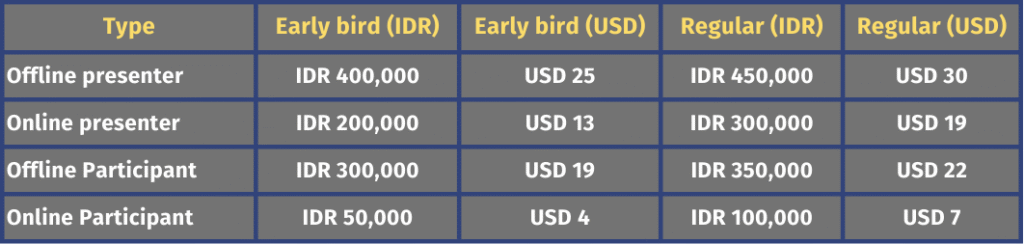
Online participants can join online via Zoom meeting during the conference.
For offline participants, you can attend directly at the conference location.